

Ofsted Inspection Updates
Ofsted has updated the way nurseries are inspected from 2025, with clearer report cards that show simple grades alongside short explanations of what each setting does well and where it can improve.
Nurseries are now graded on a five-point scale, Exceptional, Strong Standard, Expected Standard, Needs Attention and Urgent Improvement, across key areas such as teaching, early years care, children’s progress, inclusion, leadership, wellbeing, and behaviour.
Hartley Wintney’s New Ofsted Report
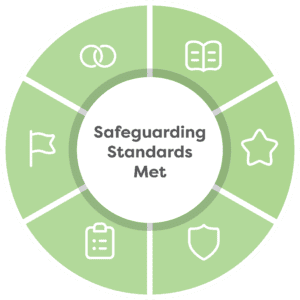
Monkey Puzzle Hartley Wintney’s most recent Ofsted inspection took place in April 2026, confirming that safeguarding standards were fully met and children’s safety and wellbeing remain a top priority. The nursery achieved Expected Standard across all six key areas of inspection, reflecting the high-quality care, learning and support provided by the team. Parents and carers can read the full Ofsted report here to learn more about the inspectors’ findings.
New Ofsted Report

What Ofsted Highlighted
Children’s Welfare and Wellbeing – Expected Standard
Staff welcome children warmly on arrival and build close, caring bonds that help them feel happy, settled and a strong sense of belonging at the nursery. Effective procedures are in place to protect children’s welfare and wellbeing, including clear routines that ensure privacy during toileting and nappy changing, and consistent good hygiene practices such as regular handwashing. Leaders provide a healthy, well-balanced diet that meets each child’s individual dietary needs, with staff aware of any allergies, and children are supported to develop their independence, self-care and awareness of healthy lifestyles.
Achievement – Expected Standard
Children make steady progress and gain the skills they need for their future learning, including those with barriers to their learning or special educational needs and/or disabilities. They are interested and confident in their play, taking part happily in activities and developing independence through everyday tasks such as choosing and carrying their lunch and learning to use cutlery, which helps prepare them for school. Children build an early awareness of numbers, counting and mathematical language, and enjoy books and songs throughout the day, supported by a lending library that encourages reading and learning at home.
Behaviour, Attitudes and Establishing Routines – Expected Standard
Staff and leaders form caring, positive relationships with children, who are keen to attend, enjoy their play and feel safe and secure in the team’s care. Consistent daily routines help children feel settled, and staff offer babies sleep routines similar to those at home so the day feels familiar. Staff act as positive role models and praise children for what they do well, and they provide well-considered support, including calm, quiet spaces and time to talk, for any child who needs extra help to manage their feelings and emotions.
Curriculum and Teaching – Expected Standard
Inclusion – Expected Standard
Leadership and Governance – Expected Standard
What it’s like to be a child at Monkey Puzzle Hartley Wintney
Children experience a warm, welcoming environment where they build trusting relationships with staff and feel safe, confident and happy. They benefit from a curriculum that covers all areas of learning and gives them plenty of opportunities to explore and investigate, with staff knowing each child’s individual learning needs, including any barriers to learning or special educational needs and/or disabilities. Children develop friendships, learn to cooperate with others and grow in independence and self-care, while staff respond warmly and sensitively to their needs, introduce new vocabulary through everyday moments and support children’s resilience as they gain confidence.
